
Why Do Blackheads Look Black and Why Are Whiteheads Closed? Understanding the Science Behind Clogged Pores
Why Do Blackheads Look Black and Why Are Whiteheads Closed? Understanding the Science Behind Clogged Pores
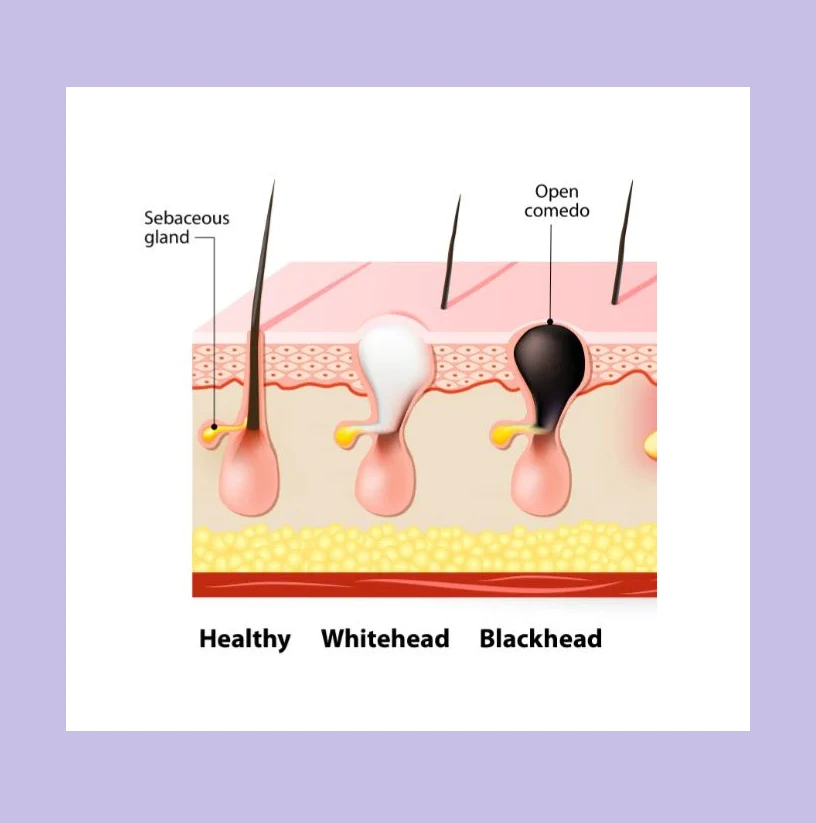
Blackheads and whiteheads are two common types of acne known medically as open comedones (blackheads) and closed comedones (whiteheads). They both form when pores become clogged with oil (sebum), dead skin cells, and sometimes bacteria. Yet they look and behave differently because of how the pore is structured and how it reacts to air. Let’s explore why blackheads appear black and why whiteheads remain closed.
🧪 Why do blackheads look black?
Blackheads get their dark or black color not from dirt, as many people believe, but due to a natural process called oxidation.
Here’s how it works:
-
When excess sebum and dead skin cells block a pore, but the pore remains open at the surface, it becomes an open comedone.
-
Inside this open pore, the trapped material (mostly sebum and a pigment called melanin from skin cells) is exposed to the air.
-
When melanin in the buildup reacts with oxygen, it turns dark — similar to how a sliced apple turns brown when exposed to air.
This chemical reaction changes the color of the clog from yellowish or white to black or dark brown, making it appear as a tiny black spot on the skin’s surface.
Blackheads often form in oilier areas like the nose, chin, and forehead, where pores are naturally larger and more likely to stay open.
🔒 Why are whiteheads closed?
Whiteheads, on the other hand, form when a pore is clogged and the top of the pore stays sealed by a thin layer of skin. This creates what’s known as a closed comedone.
Because the trapped oil and dead skin cells are not exposed to air:
-
Oxidation does not occur.
-
The buildup inside the pore retains its white or flesh-colored appearance.
Whiteheads often feel like small, firm bumps under the skin. Since they’re covered by a thin skin layer, they can be harder to treat and extract than blackheads.
⚖ Same cause, different outcome
Both blackheads and whiteheads start from the same basic issue: excess sebum production, dead skin cell buildup, and sometimes bacteria clogging a pore.
The difference in their appearance comes down to whether the top of the pore stays open (leading to oxidation and dark color) or closed (preventing oxidation, so it stays light).
✅ In summary:
-
Blackheads look black because the open pore exposes the clog to air, causing melanin oxidation.
-
Whiteheads stay closed, preventing oxidation and keeping the clog white or skin-colored.
Understanding this difference can help you choose the right skincare routine, like gentle exfoliation for blackheads and products to promote cell turnover for whiteheads.
Related Blog
What Causes Oily Skin and Can It Be Managed Naturally? Exploring Root Causes and Gentle Solutions
Aug 2, 2025 by Admin
General
What Are the Signs That You Have Sensitive Skin? Key Symptoms to Help You Identify This Delicate Skin Type
Aug 1, 2025 by Admin
General