
What Are the Most Common Types of Pigmentation on the Face? Understanding Melasma, Sun Spots, Post-Inflammatory Hyperpigmentation, and Freckles
What Are the Most Common Types of Pigmentation on the Face? Understanding Melasma, Sun Spots, Post-Inflammatory Hyperpigmentation, and Freckles
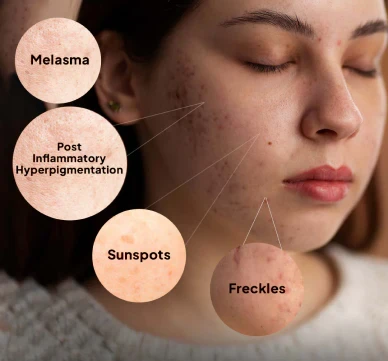
Pigmentation on the face is one of the most common skin concerns worldwide, affecting people of all ages and skin tones. While pigmentation itself is simply an increase in melanin (the pigment that gives skin its color), the underlying causes and patterns can differ greatly. Let’s explore the four most common types: melasma, sun spots, post-inflammatory hyperpigmentation (PIH), and freckles — and learn why they appear and how they differ.
1. Melasma
What it looks like:
Melasma typically appears as symmetrical, blotchy patches of brown or gray-brown discoloration. It often affects the cheeks, forehead, nose bridge, upper lip, and chin.
Causes:
Melasma is strongly linked to hormonal changes, which is why it’s common during pregnancy (often called the “mask of pregnancy”) and in women taking birth control pills or hormone therapy. Sun exposure makes it worse, as UV rays stimulate melanocytes (cells that produce melanin) to create more pigment.
Who it affects:
Melasma is more common in women and in people with medium to darker skin tones.
2. Sun Spots (Solar Lentigines)
What they look like:
Flat, oval, brown or black spots that vary in size. Unlike freckles, sun spots tend to stay year-round and do not fade significantly during winter.
Causes:
They develop from cumulative sun exposure over years, which explains why they often show up on areas most exposed to sunlight, like the face, hands, shoulders, and chest.
Who it affects:
They can appear in anyone, but are more common in people over 40 as the skin shows signs of chronic UV damage.
3. Post-Inflammatory Hyperpigmentation (PIH)
What it looks like:
PIH shows up as flat spots that range from pink to red to brown, depending on skin tone. The spots develop where there was previously inflammation or injury.
Causes:
Any trauma to the skin — acne, eczema, cuts, burns, or even aggressive cosmetic treatments — can trigger an overproduction of melanin as the skin heals.
Who it affects:
People with darker skin tones are more prone to PIH, and the spots can take longer to fade.
4. Freckles (Ephelides)
What they look like:
Small, flat, light to dark brown spots, usually a few millimeters wide. They often cluster across the nose, cheeks, and sometimes shoulders and arms.
Causes:
Freckles are genetic but become more noticeable after sun exposure. Unlike sun spots, freckles often fade or lighten during months with less sun.
Who it affects:
Freckles are more common in people with lighter skin, particularly those with red or blonde hair.
Why It Matters
Recognizing the type of pigmentation is important because the treatment approach differs:
-
Melasma is managed with sun protection and gentle brightening agents like azelaic acid or vitamin C; harsh treatments can make it worse.
-
Sun spots may respond well to chemical peels, laser treatments, and topical fading creams.
-
PIH improves over time, especially with sunscreen and products that speed cell turnover.
-
Freckles are generally harmless but can be lightened with lasers or peels if desired.
Conclusion
Pigmentation on the face can result from hormones, sun, inflammation, or genetics — and each type behaves differently. Understanding whether you’re dealing with melasma, sun spots, PIH, or freckles is the first step toward choosing the safest and most effective treatment.
Related Blog
What Causes Oily Skin and Can It Be Managed Naturally? Exploring Root Causes and Gentle Solutions
Aug 2, 2025 by Admin
General
What Are the Signs That You Have Sensitive Skin? Key Symptoms to Help You Identify This Delicate Skin Type
Aug 1, 2025 by Admin
General