
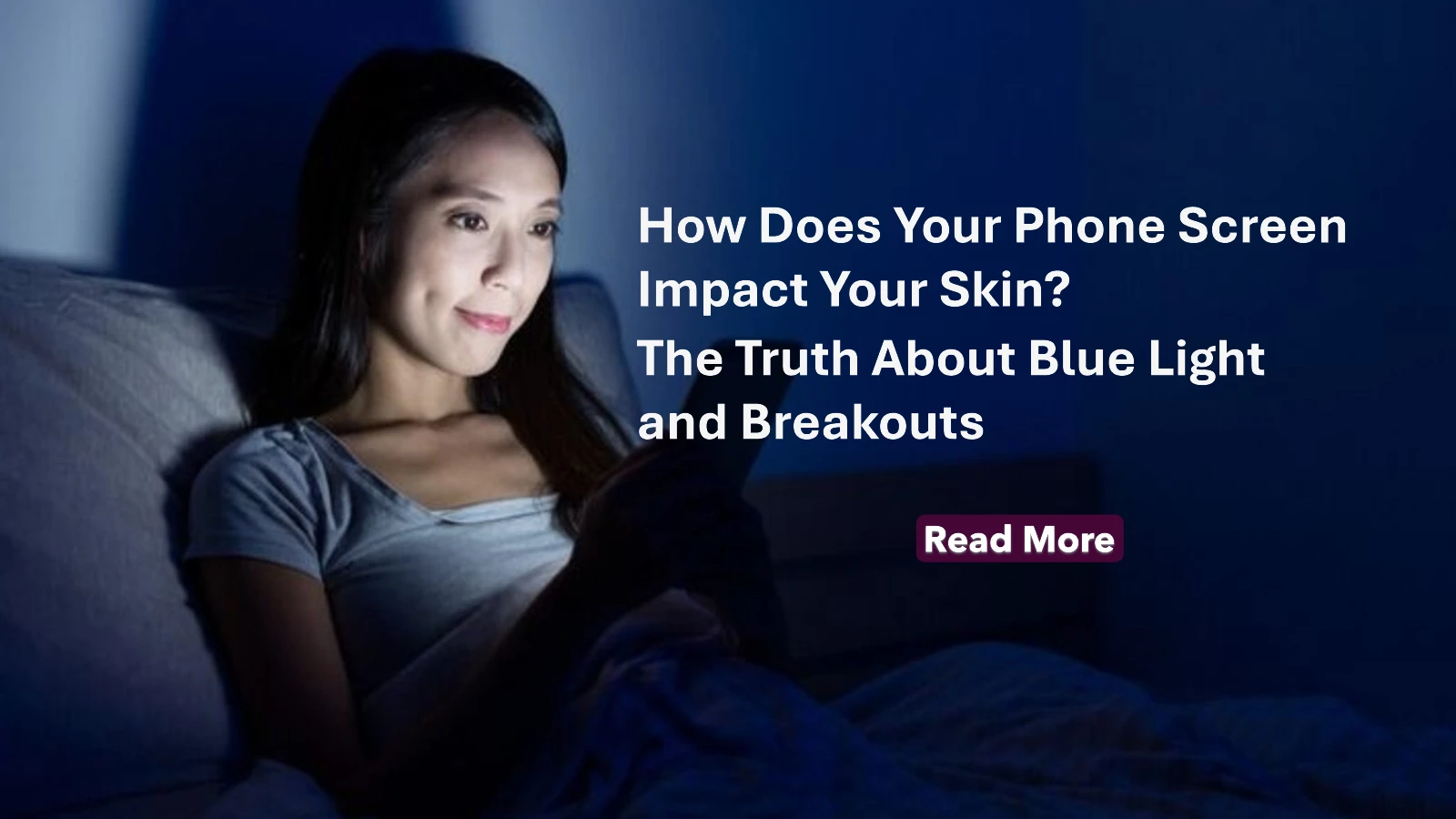
How Does Your Phone Screen Impact Your Skin? The Truth About Blue Light and Breakouts
How Does Your Phone Screen Impact Your Skin? The Truth About Blue Light and Breakouts
In our digital world, smartphones have become constant companions. We rely on them for everything—from work and social media to entertainment and daily communication. But while we're glued to our screens, our skin may be silently suffering. You’ve probably heard about the dangers of UV rays, but what about the effects of blue light—the kind emitted from your phone screen? Could your screen time be contributing to acne, dullness, or premature aging? Here's what you need to know.
What Is Blue Light?
Blue light, or High-Energy Visible (HEV) light, is a part of the visible light spectrum that’s emitted by the sun, LED lighting, laptops, tablets, and smartphones. While natural blue light exposure from the sun is unavoidable, our increased exposure to artificial blue light—especially from phone screens—has raised concerns among dermatologists and skincare experts.
The Effects of Blue Light on Your Skin
-
Accelerated Skin Aging
Blue light can penetrate deeper into the skin than UVB rays. Some studies suggest that prolonged exposure may lead to oxidative stress, which damages skin cells and contributes to premature aging, including wrinkles, fine lines, and hyperpigmentation. -
Hyperpigmentation and Dark Spots
Blue light may stimulate melanin production, particularly in people with medium to deep skin tones. This can lead to patchy discoloration, melasma, and lingering dark spots after breakouts. -
Breakouts and Skin Inflammation
Holding your phone close to your face transfers heat and bacteria, which can trigger clogged pores, breakouts, and inflammation. Constant contact with your phone can also disrupt your skin barrier, especially if your screen isn’t regularly cleaned. -
Disruption of Skin’s Natural Repair Process
Blue light exposure can interfere with your circadian rhythm, leading to poor sleep quality. As a result, your skin may lose its chance to fully repair overnight, increasing signs of fatigue, dullness, and dryness.
How to Protect Your Skin from Blue Light
-
Use Blue Light Filters: Apply screen protectors or use night mode or blue light filters on your devices.
-
Wear Broad-Spectrum Sunscreen: Look for sunscreens with iron oxides, which offer protection against HEV light as well as UV rays.
-
Incorporate Antioxidants: Use serums or moisturizers containing Vitamin C, niacinamide, or green tea, which help neutralize oxidative damage.
-
Limit Screen Time Before Bed: Reducing screen exposure before sleep supports both your skin and your overall health.
-
Clean Your Screen Regularly: Use alcohol-free wipes to remove oil, dirt, and bacteria from your phone screen.
Final Thoughts
Your phone may be an essential part of your daily life, but it could also be subtly impacting your skin health. From blue light exposure to bacterial transfer, our devices play a bigger role in skincare than we realize. By understanding these effects and taking small protective steps, you can enjoy your screen time without compromising your skin.
Related Blog
What Causes Oily Skin and Can It Be Managed Naturally? Exploring Root Causes and Gentle Solutions
Aug 2, 2025 by Admin
General
What Are the Signs That You Have Sensitive Skin? Key Symptoms to Help You Identify This Delicate Skin Type
Aug 1, 2025 by Admin
General